blogtopsites.com

Showing posts with label effluent treatment plant. Show all posts

Wednesday, 5 February 2020

What is the Aerobic Wastewater Treatment System | Chokhavatia Associates

Aerobic wastewater treatment is a stand-alone system and by removing the BOD and TSS from the industrial water it makes the wastewater useful. This treatment can be used specifically to remove nitrogen as well as phosphorus. This system plays a vital role to clean the wastewater and maintain the eco-system.


Aerobic wastewater treatment is usually known as a secondary treatment plant. Considering the biological wastewater treatment systems, there are 2 main types of the same.
1. Aerobic System
2. Anaerobic system
Chokhavatia Associates are Expertise in designing the Wastewater Treatment Plants for different types of waste water generating effluents and its applications. We have successfully designed and commissioned Activated sludge Plants for various industries like sugar, soap, solvent and oil extraction industries, edible oil refineries, food, dairy, soft drink bottling, breweries, starch, pesticides and bulk drug pharmaceutical industries chemical and mining industries, etc.
If you need more details about our Consultancy services & Turnkey services please Contact us at office@chokhavatia.com.

Tuesday, 9 July 2019

Why Does The Dairy Industry Need a Effluent Treatment System? | Chokhavatia Associates


The List of Effluents that You Must Care to Dispose
Let’s get a bit deeper, and peek into the major effluents discharged in the dairy industry and propose suitable Effluent Treatment Plant for dairy industry.
While the industry produces milk, butter or cheese using processes like pasteurization or homogenization this results in high levels of BOD (Biochemical oxygen demand) and COD (Chemical oxygen demand) that need to be treated before being discharged into the environment.
The other common effluents are suspended solids, milk fat and also the dairy generates odors that need to be taken care.
Every dairy production unit requires such a Dairy Wastewater Treatment Plant that efficiently tackles the unbalanced levels of BOD, COD, suspended and dissolved solids, that leads to safe disposals of industrial waste.

Friday, 15 June 2018

What Are The Normal Characteristic Of Effluent Treatment Plant Design | Chokhavatia Associates

The characteristics of the Effluent Treatment Plant Design determine the important factors that are related to it. The biological, chemical, and physical properties that affect the quality of effluent must be considered while designing the treatment plant.

Characteristic of Effluent Treatment Plant

  • The physical characteristics of the effluent: You need to consider the physical characteristics of the effluent while designing your plant. This includes the color of the effluent, the constituent solids, its temperature, and even odour. This also means that the presence of suspended solids indicates the poor quality of effluent that makes the treatment difficult.
  • Capability to withstand shock loads: While designing the plant, you should also consider the fact that it needs to be able to withstand the shock loads during festival seasons such as Christmas and New Year. The effluent load can also increase during various festivals.

Read More .....

Friday, 8 June 2018

What Wastewater Treatment Systems Are Available In The World? | Chokhavatia Associates

Sewerage in the water contains various contaminates such as bacteria, dirt, etc. that can be harmful to the body of water. This wastewater needs to be treated in order to make it reusable for the general public or industries. A whole new set of industrial wastewater treatment plants have emerged due to the dire need of water recycling.


In order to disinfect the sewage water, industrial wastewater treatment is used. There are many ways by which wastewater can be treated. Constantly, research to build more efficient industrial wastewater treatment plants is being done. Now we are going to discuss a few methods of treating the sewage water.

Primary form of treatment

This is one of the most basic forms of wastewater treatment systems. It is a three steps process. In this, first the contaminated water, which contains solids and floating items, is made to pass through a bar which helps separate the floating items and the liquid. After this, other small anomalies such as sand and small stones (organic matter) are eliminated from the water by using another container with even smaller openings. The water that remains is disinfected to remove any bacteria or excess chlorine, after which, the treated water is dumped in the oceans, rivers or other water bodies and the solid waste is kept aside to be used in landfills.

Secondary form of treatment

If Environmental Protection Agency (EPA) were to be followed, then primary treatment would not be considered enough. The primary form of treatment is not enough for industrial wastewater treatment, as it only gets rid of 50% of the bacteria and the bacteria still in the water can deter the environment. It is the secondary treatment, which is essentially a biological process that relieves the water from 85% of the bacteria.

Tertiary form of treatment

When it comes to cleaning industrial waste, then the wastewater treatment systems used should be extensive and thorough. It is due to the fact that wastewater of industries contains many chemicals and toxins which can cause death of aquatic life as well as humans if dumped untreated into any water body. To do so, many complex methods, such as micro filtration, chemical precipitation, carbon adsorption, evaporation and many others need to be performed.

If this water was to let run free, then the environment will be in grave danger, not only the aquatic life, but other flora, fauna and even humans will suffer. Water cycle makes sure that the water travel throughout the world and that means that any contamination anyone causes, affects every person there is. Hence, it is our duty to make sure that these wastewater industrial treatment plants work in each and every country to ensure sustainable development and protection of all kinds of lives. These methods also ensure that the waste is reused, that is, the solid waste is turned into fertilizers and the treated water is sent to the ocean or other water bodies.

We are at Chokhavatia Associates Waste water Management company. We mainly offers Common Effluent Treatment Plant (CETPs), Sewage treatment plant (STP) ,Effluent treatment plant (ETP) Design & Development Services. You need more information about our projects and plant please visit here: chokhavatia.com


Thursday, 7 June 2018

Ways to Save Our Environment | Effluent Treatment Plant Design | Chokhavatia Associates

Our environment is badly affected by industrial waste. Especially with industries in the segment like pharmaceutical and chemical, there are more dangerous pollutants that affect the land, water and air. As the industries grow, the amount of pollutant also increases along with its growth.


Proper measures are essential if we are going to save our environment from the industrial pollute. The very fabric of our nature is in danger because of the industrial pollution in major cities and suburbs. The government and environmental agencies need to take a peek into this situation and come up with solutions that will preserve our environment from the danger of depletion.

The etp design (Effluent Treatment Plant is one of the ways to control the industrial waste from spreading into environment. Imagine the volume of destruction the industrial waste can cause to the environment. If the industrial waste water is let into our rivers and streams, this can pollute the river with poisonous chemical and thereby deplete the aquatic life.


Moreover, the poisonous gases that are let into our atmosphere affect our atmosphere badly. The effluent treatment plant can be a great solution to save the environment from deterioration through effective water treatment strategies.

Generally, the industrial waste goes through a 3-step water treatment process before they can be turned into a resource that does not harm the environment in any way. The etp design enables to purify the water before it is released into the water bodies.

The three steps in the water treatment process are:


  1. Pre-treatment
  2. Primary treatment
  3. Secondary treatment


Pre-treatment is the process before the water enters into more complex process of evaporation, filtration, incineration, etc. During this process the water from the industrial waste is logged into huge tanks. This allows the solid substances to float on the top, substances like oil, grease, certain chemical and other industrial waste. During the process of pre-treatment, these solid substances are removed from the flowing water and they are led to the primary treatment facility.

Primary Treatment
During the primary treatment the industrial waste water is allowed to pass through a corrosion free High Density Poly ethylene also called as the HDPE pipe. The effluent treatment plant manufacturers provide the materials that are installed to successfully treat the water. Through this pipe, water is poured onto big chemical tanks for further treatment.

During primary treatment certain poisonous chemical waste substances are removed through chemical reaction, thereby making the rivers and water stream safe from the industrial pollute. Further, any floating solid substance like oils or grease is also removed during the primary treatment.

Secondary Treatment
The secondary treatment is a more thorough treatment where the effluent treatment plant manufacturers provide the infrastructure to remove the waste substance from industries. Several processes like evaporation, filtration, centrifuging and incineration are used to remove the harmful substance and make the water from the industries to be harm-free before it is released into the water bodies.

Sunday, 29 October 2017

Designing Effective Effluent Treatment Plant

The effluent treatment plant is designed for treating the effluent coming from various areas of the plant. The treatment of different effluent varies with the type of effluent. Industrial water contains many impurities and therefore highly effective Effluent Treatment Plant is required. Effluent Treatment plant design needs to be must take into consideration several factors. Characteristics of effluent that need to be considered for ETP plant design is the flow of the effluent along with biological, chemical and physical properties that affect the quality of effluent.


Some of the features of effective effluent treatment plant are-

 •Sturdy construction
 •Resistant to corrosion
 •Superior performance
 •Rapid installation
 •Flexible in reworking
 •Less civil work involved Designing of Effluent Treatment Plant

Characteristics of effluent are necessary to be considered in etp Plant design. One can decide how large the effluent plant will be depending upon the estimated inflow into the plant which is typically estimated in cubic metres per year. To get the hydraulic computation right in Effluent Treatment Plant, it is important to get the right estimates of variations in the inflow in order to get the hydraulic computation right. This also helps in correctly determining the size of conveying pipes and channels.

It is important that effluent treatment plant is built scalably as in the future the inflow of effluent increases. There are seasonal variations in the size of inflow. It may happen that in day there is larger inflow than in the night. Flow needs to be stabilised to make it constant or near constant for an effective effluent treatment plant design.This prevents functioning of treatment processes downstream. This can be achieved through the use of equalisation tanks or ponds.

Toxic substances in the effluent can affect the treatment processes. This can be reduced by dilution of toxic effluent by mixing it in equalisation ponds with effluents having lesser toxic content.

Effluent treatment plant design should be such that it is able to bear shocks during festive time and other occasions.

Physical characteristics of effluent like the colour of effluent, solids in it, its temperature and odour are also taken into account. Suspended solids indicate the poor quality of effluent which is difficult to treat.Solids may consist of grease, floating debris or oil slicks. This indicates absence of any form of pre-treatment of the effluent.

Another important thing that one need to consider in Effluent Treatment Plant design is the temperature of the effluent as an unfavourable temperature condition can impede the important biological and chemical processes. Also the solubility of important gases like oxygen is affected. At higher temperature of effluent various reactions may occur. It also promotes the solubility of oxygen in the effluent.

Scarcity of water also needs to be considered as then better technologies are needed.

ETP design is such that the required characteristics of effluent comply with the prescribed norms. If there is a risk that underground water may deplete in future or may get polluted or the soil may get polluted then effluent treatment plant needs the use of better technologies.

Wednesday, 14 June 2017

What is the Importance and How Does an Effluent Treatment Plant Work

Applying environmental awareness in the treatment of liquid waste


The effluent treatment plant design, is the main investment for anyone who wants to start treating the liquid waste produced by your company. The installation of an effluent treatment plant is necessary since, if liquid waste is not properly treated before being returned to the environment, it can cause irreversible damage to nature.


Inadequate disposal of effluents is responsible for polluting and contaminating not only soil or water, but also the ecosystems present in those sites that directly impact human health. In addition, effluent treatment laws at the international, federal, state and municipal levels are increasingly stringent, as well as the environmental awareness of customers, who are now giving preference to companies that are concerned with sustainability and have their own system Of effluent treatment plan.

What are Industrial Effluents?
Industrial effluent is the dumping of liquid waste pollutants from manufacturing processes that range from waste from the industrial processes themselves, to domestic sewage. That is, it is all water that is used in an industry and that then needs to be discarded and treated by an effluent treatment plan.

The industries that produce effluents and, consequently, must implement etp plant design, are the automotive industry, breweries, distilleries, dyeing, cosmetics, mining, pharmaceutical, food, animal feed, hygiene and cleaning industries.


An industry can use water for a variety of purposes, such as for washing the factory floor or some equipment in the production process, for incorporation into the product itself and for cooling systems and steam generators. In all of these uses, the industry is producing liquid waste that needs to be treated by an effluent treatment plant before being thrown into the wild.

This wide variety of industries and industrial activities can generate liquid waste with different characteristics, and in order to carry out the treatment and implement the appropriate effluent plant design, the company needs to know the effluent it is producing. For this, it is necessary to know certain particularities of the tailing, such as the volume produced and the specific composition, which involves toxicity, quantity of pollutant loads and organic load, presence of contaminants, concentration of components, among other aspects.

Implementation and operation of an effluent treatment plant


There are numerous processes involved in effluent treatment plant, such as physical, chemical, biological, batch and flow processes. There are also several types of reactors, such as fixed bed reactors, fluidized or expanded bed and sludge blanket. In order to determine which type of process and reactor is most suitable for each industry, it is necessary to know the characteristics of the effluent produced and to adapt to the needs of the company in question.

The biological treatment consists of removing the organic matter present in the liquid waste by two modes: anaerobic or aerobic processes. The aerobic process is characterized by the use of activated sludge, aerated lagoons, among other techniques, while the anaerobic process is marked by the use of biofilms, biocontactors and some lagoons. Physical treatment is responsible for removing suspended solids through separations such as filtration, flotation, and sedimentation. Finally, the chemical treatment promotes the removal of pollutants through the addition of chemical reagents and the consequent chemical reaction promoted by them, such as coagulation processes, oxidation, pH neutralization and chlorination for disinfection.

Friday, 2 June 2017

Effluent Treatment Plant to preserve our environment

Water is polluted because of industrial waste. Industries emit a lot of waste substances which when disposed get contaminated with water and become a serious threat for the environment. Water is among the most important resources for our living and we cannot afford to pollute the water. Polluting the water causes serious damage to the water habitat and the overall ecosystem. Water should not be wasted and it should be treated with effluent treatment plant and it should be preserved, and saved to be used later. It’s quite challenging to save our water being polluted from industrial resources for a healthy habitat and for our own use.


Industrial pollution has been a big menace lately. With the country developing at a rapid pace, industries are sprouting in every suburb as well as urban regions. Whatever industry it may be, they pollute the environment with synthetic and chemical substances that are harmful to the environment. The challenge is to keep the industrial waste separate from the water flow. Environmental engineers also play a big role in preserving the environment. They are involved in effluent treatment plant projects and advise industries on way how not to pollute the environment and preserve it. Industries pollute natural resources like air, water and land to a great extent that it becomes unusable. These are the very essential fabric of our living and we definitely cannot afford it.

As the waste water exits the industrial area, it flows through the agricultural land and later into the natural water resources. While it flows through the agricultural lands, the soil gets polluted and barren. The once yielding land becomes barren and doesn’t yield crops anymore. It would be a big blow for the farmers and economy if proper care is not taken to dispose the industrial waste from the industries.


The ultimate solution for this situation is to treat the water and convert it into pure water before it is disposed into the natural water resources. During the preliminary treatment of water, the solid substances like oil, greases that float over the water are first removed. This step is quite common across industries, households and civil terminals. During this step certain insects and biological activities are also removed from the water.

During the secondary step the water is allowed to pass through aerators where oxygen is passed into the water. The reason for passing oxygen is that the chemical structure of the water will be preserved. Also, a certain amount of chlorine is added to the water. This process is called as chlorination. The amount of chlorine that is added depends on the pH value of the water. Further, the water is separated from hard water and soft water. The hard water is passed on to re-circulate to further remove impurities and the soft water is carried over to the next step of purification.The semi-purified water is allowed to pass through a tertiary treatment. During this phase thick materials like paints, oils, greases and other chemical substances are separated from the water. In this phase organic matter is passed to purify the water.

Effective steps need to be taken in-order purify water through effluent treatment plant manufacturers before it is allowed to pass on into the natural water resources. It helps to save and preserve our environment.

Monday, 15 May 2017

Why You Should Consider the Characteristics of Effluent During Effluent Treatment Plant Design

There are certain important factors that one should take into consideration while designing an effluent treatment plant. This article will discuss about etp plant design.

 http://chokhavatia.com/services/turnkey-services/effluent-treatment-plants/


The characteristics of the effluent that you should consider are the flow of the effluent along with the biological and chemical properties that have the potential to affect the quality of the effluent.

First of all, decide on the size of the effluent treatment plant design; it actually depends on the inflow into the plant estimated through cubic meters / day almost everywhere in the world. It is necessary to get the right number in terms of the inflow as this will directly influence the hydraulic computations. This also helps to determine the correct size of the conveyors and pipes.

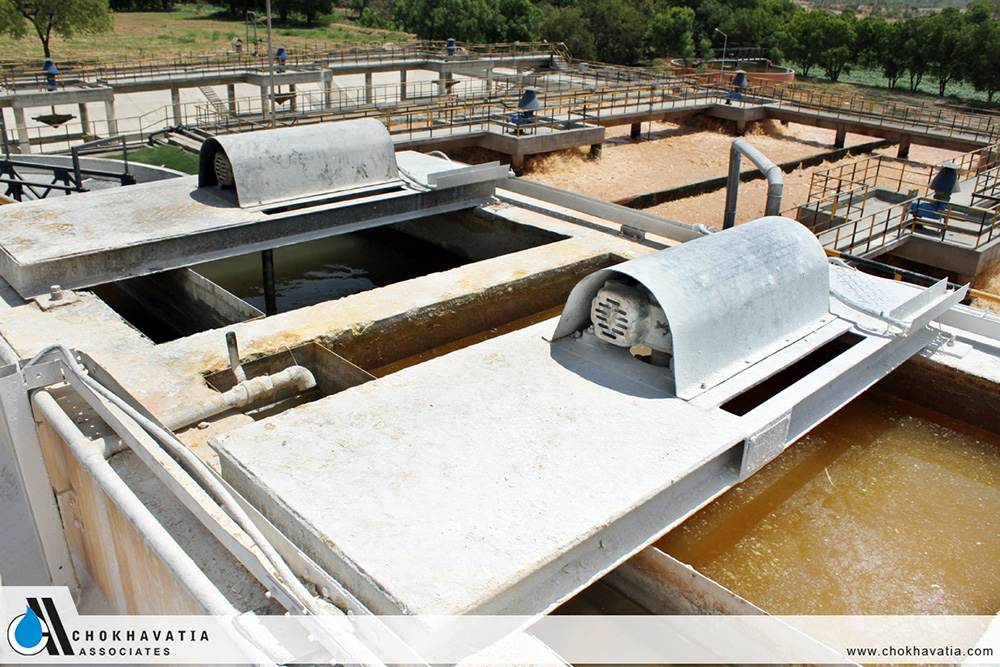
Eflluent Treatment Plant Jaipur


Also, take proper precautions to take into consideration the increase in effluent in foreseeable future. The effluent treatment plant design should be scalable to handle the increasing inflow.

There are also possibilities of seasonal variations that affect the size of inflow. For instance, the inflow could be more during the day than at night. Often time, the inflow is exceedingly more during rainy seasons. You may need to stabilize the inflow of the content so that you may protect the functioning of the treatment process downstream.

The stabilization of effluent can be achieved through the use of equalization tanks. Another benefit of the equalization plant is to decrease the toxic content by mixing with less toxic effluent in the equalization tank.

Also, ensure that the effluent treatment plant handles shock load pretty well during festival times like Christmas, New Year or Ramzan.

So far we discussed about the inflow of effluent into the plant. Now, some physical characteristics of the effluent also influence in the design of the plant. For example, the color of the effluent, temperature and odor influence effluent plant design.

Temperature is an important aspect while treating the effluent. Unfavourable temperature can affect the biological and chemical process of treating the effluent. It can affect the solubility of important gases such as oxygen. A higher temperature promotes various reactions and also supports the solubility of gases like oxygen.

If the temperature of the effluent is maintained at 35 degree Celsius the biological and chemical process may be slowed down or become inactive. In such cases, building the plant underground or introducing other measure like anaerobic digestion to maintain high temperature need to be considered.

Presence of elements like inorganic chemicals, toxins and heavy metals need special treatment process.

The other factors that need to be considered are the odor and color of the effluent; they indicate the absence of pre-treatment before discharging into the sewerage network.

In case the effluent water is of low quality, complex design may be required.

Tuesday, 18 April 2017

Sewage Water Treatment Process | Chokhavatia Associates

Sewage water needs to be treated in the sewage plant before it can be drained into the environment. Careful measures need to be taken. If not, it can lead to harmful effects in the environment. Health issues, water pollution are some of the problems that are caused by the sewage water if not treated properly.


The sewage is the waste water that is collected from wash basins, toilets, baths, washing machines and industrial waste. They are treated through a series of steps until it’s treated and finally drained back into environment when it’s considered to be safe.

Screening
Screening is the initial process in sewage water treatment. The sewage system makes use of the septic tank that collects and stores the sewage water. The solids settle down and the remaining water is sent downstream for processing through 6 inch to 4 inch pipeline. Such a process is called a decentralized system where every house’s sewage is treated in separate septic tanks.


During the screening process, large objects like diapers, tampons, sanitary items, face wipes, plastics and rags are removed to prevent from any blockage in the downstream to the sewage plant. Items like grit are removed using special equipment that gets washed away into the sewer.

The sewage water treatment can use the gravitational force to get to the sewage treatment plant. In-case if the pipeline excavation is not possible due to hard rocks or any other reason, the sewage water need to be pumped into the pipeline right to the sewage treatment plant. The pipeline measurements range from 6 inches up-to 30 feet of well built concrete tunnels.

Primary Treatment
During the primary treatment, solid waste (human waste) is separated from the waste water and sent to be treated. The wastewater is collected in large settlement tanks, where the solid waste gets settled leaving the water on the surface level. There is also fat that rises to the top and form a crust. The liquid in-between the solids and crust is sent to secondary treatment whereas the solids and the top layer of crust are sent for further treatment periodically.

Secondary Treatment
The water from the primary treatment is placed on large rectangular tanks. Now, oxygen is supplied into this process to encourage the growth of bacteria. The bacteria break the tiny bits of sludge that might have escaped during the previous treatment. It also reduces other pollutant and detergents that might still be mixed with the waste water.

Final Treatment
In this process, the waste water is passed into a settlement tank. Excess sludge is formed again due to the bacterial action. This sludge is repeatedly scraped to remove from the water. Once the sludge is removed, the water is free from pollutants. The water at this stage is completely free from any kind of harmful physical or chemical substance, and it is free to be drained into the river.

The waste water goes through several stages in the sewage treatment plant to make it safe for the environment. The water is thoroughly treated until they make sure that it is clean and pollutant-free before discharging it to the water bodies. One more important factor for screening the sewage water is to prevent any diseases that may be caused due to bacteria, virus or any organisms.

Friday, 24 February 2017

Plant of Effluent - Breaking Barriers in Nurturing Nature

It is the rampant pollution, extravagant usage of water along with increase in population has resulted in acute shortage of this natural resource. Treating water with appropriate carefulness, keeping quality requirements in mind is quite essential now days. There are number of solution providers who have expertise in establishing and maintaining Plant of Effluent through which they remove pollutants from water and make it reusable for almost all purpose. Service Providers recycle the contaminated water, and recover other valuable properties of water so that the waste and pollution is been reduced; or else you can say that they help in protecting the environment..

Factors That Should Be Looked Upon In Picking Up A Solution Provider:

 Effluent Treatment Plant Model


Internet helps in finding solution providers who have niche in delivering quality services in Waste Water Treatment; and it is the deep knowledge in this field, knack of delivering custom made solutions through the team of experts is a deciding factor in picking up a service provider. There are many establishments who have specifically focused in rendering services for Treatment plants for sewage, effluents and like minded arenas; and have effectively completed projects of all sizes in India and abroad. An expert is the one who can easily handle projects for all sorts pf industries; and whether it is Textile, Beverage sugar mill Hotels resorts or any other sector he along with his team has vigour in delivering magnificent plant that can give best results in less of space and less of cost. With growing population, space is also an issue, so an established solution provider keeps in mind about the space while contriving the design.


Among turnkey of solutions provided by experts under effluent management, Waste Recovery, Effluent treatment, reject management and Effluent recycling are being dealt in order to control pollution occurred due a number of industrial activities going on. Each industry has its own requirement, and the beauty lies in contriving set up as per individual desires; and the success history lies in technical strength and deep knowledge. Rendering complete range of services in wastewater and treatment technologies along with technical support and maintenance enhances the good will of the company in the market.

Continuous research and development in the field of environmental conversation makes the service provider technologically advanced, and this gives them an upper edge on the competitors. A solution provider of repute offers a complete way out for Effluent treatment, reprocessing and zero discharge. A renowned service provider which has knack and expertise can deliver innovative solutions for its patrons; and this aptitude gives them recognition, certification and approval from its patrons. So, it is better to check the credentials and words from their clients before assigning them your project. Having a word from the past clients of the service provider can give you exact picture. On the other hand, for best results it is advised to clearly mention your requirements as well as the budget you have before the projects kicks on. This will help both the parties to maintain cordial relationship.

Tuesday, 7 February 2017

Effluent Treatment Plant Design Plays A Vital Role In Cleaning Wastewater

Though the wastage or the leftovers from municipalities ad industries holds a number of organisms that are of pathogenic nature, it also brings several inorganic affluence that are in dissolved form along with it to the treatment plant. These elements too be have to be sieved out from the wastewater so that an appropriate level is been attained for discharge. In this write up, I am going to mention some of these constituents, and why they are thought to be essential in the design of the Effluent Treatment Plant.

Sulfur, Nitrogen, Hydrogen Ions Sulfur Phosphorus are some of the inorganic substances that can be found in wastewater. These elements have the ability to switch the pH of water, and can compound to enhance the alkalinity of waste water and chloride. Phosphorus and nitrogen act as nutrients for plants; but when treated waste water that contains high level of these elements, is been squared into water bodies, they will in turn result in escalation of algae in those water bodies.

While designing your treatment plants, apart from eradicating inorganic compounds one should consider about the threatens posed by toxic compounds. The treatment plant should also have an ability to deal with the heavy metals that are contained in in fluent. Pre-treatment steps fulfilling strict pre-treatment criteria should be incorporated in The layout of the treatment plant in question so that it is protected from toxic shock while downstream shock is being applied. The biological treatment technique makes use of micro-organism while treating the waste water. This stage of treating wastewater generates sizeable magnitude of gases like methane, nitrogen, carbon –di- oxide hydrogen and so on. Usually aerobic micro-organisms action is involved in Biological Treatment process. Wastewater should contain sufficient magnitude of oxygen dissolved for a smooth running of aerobic process. Thus, the outline of the plant in question should also feature wastewater aeration.

By analyzing the treated waste water that is flowing out from the treatment plant one can easily affirm or identify the nature of dissolved gases, and through it you can easily make it out that Whether an aerobic treatment method is ongoing or an anaerobic micro-organism are active.

With each passing day new and innovative technology and know-how is been introduced in market, so that the market is acquainted with innovative designs of treatment plants with less low cost and better results. Solution providers keep- updated themselves so that they are aware of latest technology. Relatively, this field is not that long-standing, still it has developed a lot, and it is quiet necessary so that our environment is in living condition for generations to come.

There are a number of solution providers that are delivering hand to hand plants for this purpose; and as they are professionals in this field, it is better to trust their line of action. The professionals associated with the solution provider are well aware that which type of design and lay-out will give best results for a particular project.

Monday, 30 January 2017

For Best Results Select A Proper Site Before Setting Effluent Treatment Plant

It is due to industrialization and boom in technology, there is a boom in real estate, for commercial as well as residential purpose. But, here, there need a lot of planning before setting up a residential or commercial area. Apart from roads, lights, and other related issues, laying down a well-planned sewage network comes in top of the list of basic requirements for such setups.

While picking up a construction site for Effluent Treatment Plants one has to evaluate certain factors that can determine suitability factor of the selected site for this purpose. Elements like land use, climate, geology, topography besides soil character and hydrology are the deciding factors in setting up such solutions. Physical characteristics as the depth at which rocky layer exists, besides the number of other geographical issues regarding soil, play a dominant role that are to be considered before setting up a sewage network of the area. The rocky layer should be deep enough so that the laying of sewage pipe network can be facilitated over a considerable distance. When these factors taken in account waste water can easily passes to the treatment site.

These treatment plants can also be constructed on sloppy terrains, if the slope permits, but ensure to keep structural requirements in minds prior to the commencement of the project. Solution providers with varied and vast experience in their sleeves can built multiple tiers, if there is scarcity of land where this project is to be established. Even the waste or interstitial space lied in between two premises or other utility plots can be used to develop these treatment plants.

It is better to reduce the usage of land for such purposes as we all know that God has stopped creating land long ago. Keeping this context in mind, let me tell you, that technologies or solutions that cover large area of land segments (like Constructed wetlands) will have to adopt newer technologies for this purpose. Apart from land, there are other reasons too for adopting newer and innovative solutions.

As an industrialist or as a real estate developer you must all take into account aspects as thickness of soil, as well as the amount of clay/sand plus the penetrability of the soil, beforehand setting up a treatment plant. One should also consider the level of load bearing capability of the soil (at full hydrological load), taking in account the kind of structure that has to be constructed for the plant. There are some faces that can make a site for setting up of treatment plants highly unfavorable. Any area that is located near or besides a water recharge zone, wells that are used to draw deinking well and irrigation purpose, water recharge zones, wetlands or the regions where the water table varies as per the season, and the areas that are often submerged by floods.