blogtopsites.com

Showing posts with label Sewage Treatment Plants. Show all posts

Thursday, 30 March 2017

How Sewage Treatment Plant Works | Chokhavatia Associates

Treatment Plants of Sewage are an important segment of any infrastructure now days. With ongoing activities at every nook and corner, establishing such plants as become a necessity rather than luxury.

With up gradation in technology with each passing day, you will get a plenty of ranges to pick from, while you are looking alternatives to replace and outdated septic tank to be installed in your premises. Technology has introduced septic tanks or cesspools that give much more ease for in fulfilling all set of procedures that are been applied under Sewage Treatment Plants. Of Course, this opportunity can be availed for those which are already not connected to existing main sewage or drainage. The one that are at rural homes cannot be changed so easily.

While changing already existing or a new septic tank, cost is the major factor that is being looked upon. When it comes to septic tank, do remember that it should be emptied once in a year for maintenance purpose. When it comes to treatment plant, maintenance can be a bit higher in comparison to septic tank; but it is important to empty from time to time for maintenance purpose, as it enhances the life of treatment plant as well as the level of cleaning waste and effluents at much faster arte. Besides the quality of cleaning gets improved too. Cost of Maintenance can depend upon the capacity of the treatment plant.


Keeping the cost factor in mind, it is not that change your sewage plants at your premises every now and then; So, it will be better to look at the maintenance part of the plant. No doubt, it is easier to maintain treatment plants meant for sewage in comparison to septic tanks; emptying and maintaining can depend upon the type of plant you have installed in your infrastructure.

It is the aeration in Sewage Treatment Plants and even in filters that takes an extra step in cleaning up the effluent; and such is accuracy of this system that it almost makes 98% clean; thus almost entire effluent is totally clear is from all types of contaminants. In fact, in some cases the effluent after treatment gets discharged into a rain harvesting tank, which later can be sprayed in and around the garden. But, while installation and maintenance of these sewage plants make sure to cross check the local and environmental rules & regulations to avoid any legal instances.
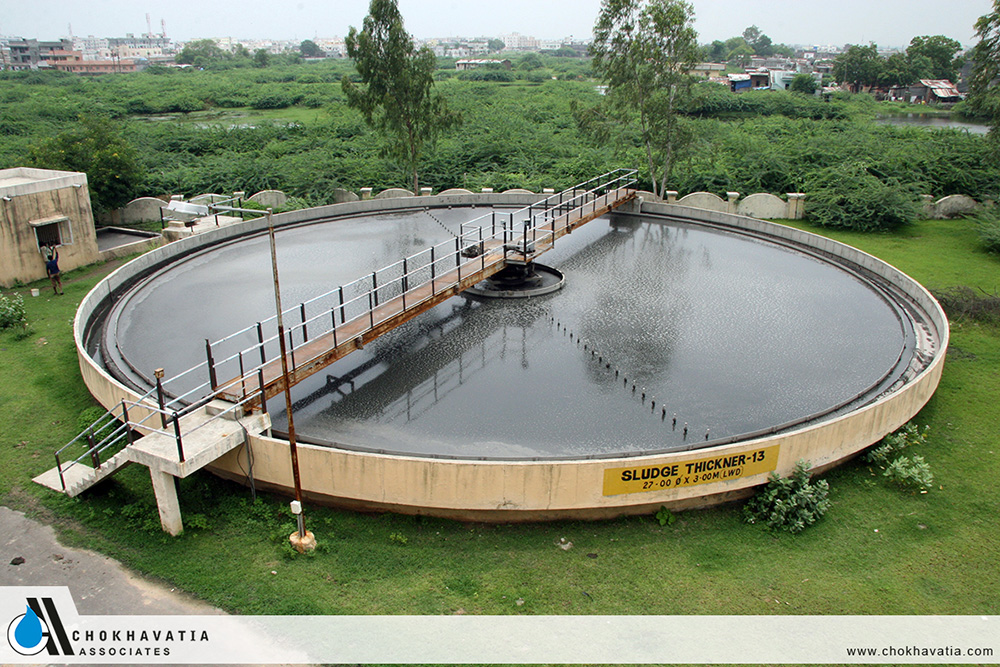


Even, the treated water through these infrastructures can be directly freed in to a live water that too with a permission from the concerned authorities. This action set aside cost and time both. Installation of such infrastructure (i.e. treatment plants of all types) takes 3-5 days as per the assessment of the site available and weather.

Though as an entrepreneur you should be well aware about the difference between a sewage treatment plant and septic tank but always it will be better to take a help of professional experts when it comes to picking up a one. Experts and environmental consultations are well aware of ever changing rules and regulations, and can deal well with the concerned officials.

Like all infrastructures, Treatment Plants of Sewage too need maintenance and for best results it is advisable to hire services of an established and expert solution provider to perform this activity.

We are at Chokhavatia Associates is Wastewater Management company. We mainly offers Common Effluent Treatment Plant (CETPs), Sewage Treatment Plant (STP) , Effluent treatment plant (ETP) Design & Development Services. You need more information about our projects and plant please visit here: chokhavatia.com

Friday, 10 February 2017

Sewage Treatment Plant Helping In Tons of Issues


Sewage Treatment Plants acts as the dumping ground and treatment facility of the wastewater for the discarded waste amassed from the residential areas, industrial setups, establishments and also from agricultural lands. The gathering and clutter of sewage systems dispatches the wastewater all through the way from cities to the site of treatment plants. The wastage is treated in these facilities so that the water pollution is controlled as a result natural environment is been preserved.  This process makes sure that before discharging to the environment in particular to the water bodies, the treated water is thoroughly clean and exempted from all sorts of containments. An added objective of treating wastewater is preventing from spreading of any epidemic due to it, and arranging a protection blanket to public health.


With the help of gravitational forces, the sewage system transports the wastewater, so that it is diverted to treatment plant.  If due to boulders of rocks, there is difficulty in excavation, sewage must be pumped, so that the wastage directly reaches its destination.  We have to find ways to find solution to overcome topographic hurdles; and experts of this field are always there to help us put in finding such ways.   Sewage pipes lying in low line areas, provisions are made to dispose of waste through vacuum.  With limited topography available, gravitational influence might not be applicable. 

STEP System also known as Septic Tank Effluent Pumping collects sewage from community or rural or townships where advanced and well planned network of sewage systems do not exist. The number of residents serve up in deciding the size and design of Septic tank and even sewage system.

Another factor that is considered while deciding the size and shape of a treatment plant is keeping in mind the   flow and type of commercial and industrial wastes. The merged sewer approaches, are built to transmit sewage and storm water runoffs together at the similar time and that too in similar pipes. The traits of the watershed are as well kept in account when the project design for merged sewer system is been developed by experts.

Now days, the style and strategy of sewer lines that moves to the treatment plants nowadays are designed in a manner that one can find separate lines for storm run-off and sewage. The storm runoff moves right to the surface water, whereas, contaminated and waste in form of sewage is transported to treatment plants specifically designed for it.  Even though, in modern setup the design system does have separate lines are been designed and constructed, there are situations when inflow and infiltration of surface water in sewage pipe lines cannot be prevented.  This in fact, may cause over flow of sanitary sewer.

Generally, there are a stack of issues related with sewage system that can be performed, it is environmentalist who through his knack can deliver number of solutions. As an entrepreneur you have to open yourself in front   of a service provider

Friday, 27 January 2017

Sewage Treatment Plant Facilitates In Reducing Waste From Water

All of us are well aware that natural resources as air and water can be recycled. As water and air are a primary source of all living beings are extensively used in day to day life, the contaminating constituents are supposed to be removed at regular intervals. Than only it can be used for manufacturing, farming, drinking, sanatorium, institutions and other purposes by populous (kitchen, toilets and bath purpose) as well as for industrial   and commercial are of ruined in value.

 Organic wastes, nitrates phosphates and other tainted residues as bacteria and suspended solids are pollutants that should be commonly removed from the water prior to make it acceptable for reuse. To reduce the contaminated constituents, Sewage treatment Plants are been used so that the water can reach as per the standards prescribed by Environmental Protection agencies.

Environmental Engineers play a vital role in designing and constructing facilities meant for waste water treatment,  and physical chemical and biological treatment are been used by these professionals in getting the job done. The features that determine type of treatment used for sewage system is as:

1) The nature of   water wastes
2) The amount of sewage treatment that is required to improve the quality

Usually, process adopted by sewage treatment plant undergoes three junctures named as primary, secondary and tertiary treatment. Initially, the solids present in the sewage water arte separated; thereafter, by using aboriginal water borne micro organisms dissolved biological matter is gradually converted into solid mass. At last, the biological solids are deactivated, there after either disposed of or re-used. Now, the treated water is sanitized chemically or physically.

 The concluding waste material, can be ejected into a wetland, lagoon, stream or whatever water resource available. It can be used for irrigation of a greenway or park. If sufficiently clean, it can be used for agricultural purposes or underground water recharge. There are a number of solution providers for this particular purpose, the one having an immense experience gives a totally different and out of box solution.  The one having a team of experienced professionals and adheres professionalism can deliver an ideal  solution effortlessly and with same enthusiasm whether  the project is for  whether it is for a bungalow, township colony high-rise building, and even for malls and hospitals.

 Domestic waste water treatment eliminates containments, from household sewage as well as waste water. It requires, physical chemical and above all biological course of action, in order to remove chemical, physical and biological containments present the discarded water flowed in sewages.
 With growing need a lot of solution providers are available in market, that have compact, economical and cost effective waste water and sewage treatment solutions with them. 

With each passing day, new upgraded technology is being introduced in the market, an expert and established solution provider quickly adopts the changes that are been introduced in the market. Besides it, after service back up by the solution provider counts a lot, and established set-ups.

Monday, 26 December 2016

The Role of Sewage Water Treatment Plants in Preserving the Environment

If you have ever given sewage treatment plants a thought, these plants are hugely beneficial as they help prevent flow of sewage and wastewater, which has been collected from households, establishments, industrial, as well as agricultural zones. The wastewater is then gathered and sent through cities to wastewater treatment plants.

The goal of wastewater treatment plants

The specific goal of wastewater treatment is to ensure prevention of pollution and preservation of the natural environment. Water can be purified with the help of sewage treatment plant design and made clean from any contaminants before it’s discharged into the environment. The goal of treating sewage is to also to protect public health as well as prevent diseases from spreading in the environment.

Yet another goal is to ensure the control of water pollution and ensuring the water is thoroughly clean and free of contaminants. This step is to ensure purity of water before it is discharged to the environment specifically to any water body in the surrounding environment.

STEP System

A better idea is to collect the sewage from the community in to an effluent sewer system. This is also called a STEP system or Septic Tank Effluent Pumping System in other words. This means that the water thus collected can be transported through pipes and disposed off safely.

Wastewater treatment plants – maintaining safe bounds

Wastewater treatment ensures that sewage water is not disposed off in a matter dangerous to your human health and other life forms. Despite the fact that the planet has remarkable ability to heal itself, we must not misuse our position as humans and always remain within safe bounds when it comes to helping to preserve the environment.

Since the water treatment facilities reduce organic as well as suspended solids to prevent or limit environmental pollution, more advanced treatment facilities have been introduced with remove dissolved matter and toxic substances from the water. Although moral awareness on the subject has increased, the noble goal of zero discharge of pollutants is yet to be achieved.

Treatment Factors

Treatment includes physical, biological, as well as chemical methods. This includes removal of residual substances that are created by treatment processes and which must be disposed off in a safe manner. Bio solids or sludge must be reused carefully by composting or application on land. In certain circumstances, they are incinerated as well.

Conclusion

To protect the environment, it is more than essential to rely on natural processes for purification. The additional increase in the population also means that society will have to rely more on treatment plants to give nature a helping hand. By considering aesthetic and environmental concerns, pollutants can be controlled. Surely, the best of treatment plants can be used to control the environment in a better manner.